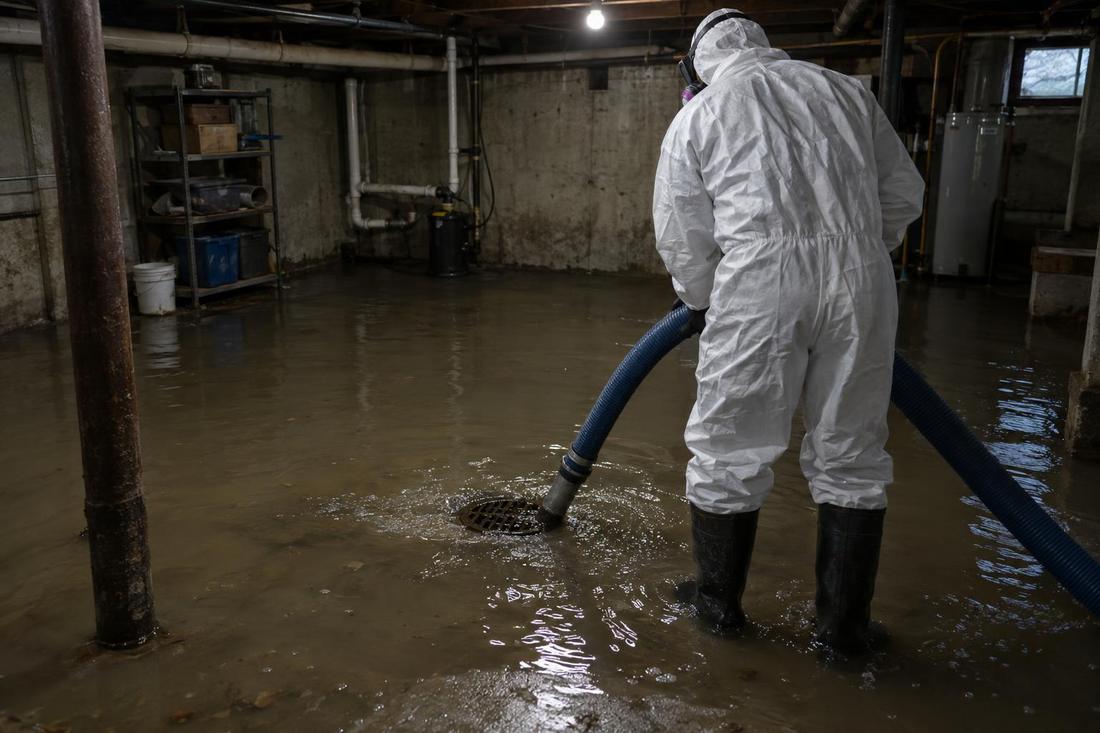
Key takeaways
- Avoid contact with the water and keep kids and pets away.
- Stop using water in the house.
- Do not try to clean it without protective gear.
- Porous materials touched by sewage are usually removed.
Why it is serious
Sewage can carry bacteria, viruses and parasites. Skin contact, splashes and airborne droplets can all be risks. It also leaves strong odors and can contaminate carpet, drywall and insulation deeply.
It should be treated as a health hazard.
First steps
Stop using sinks, toilets, showers and appliances that drain. Keep people and pets out of the area. If it is safe, turn off power to affected areas. Call a plumber for the blockage and a restoration company for cleanup.
Do not use a household vacuum.
Professional cleanup
Crews wear protective gear, extract the water, remove porous materials, clean and disinfect hard surfaces and dry the area. Waste is bagged and disposed of properly.
Clearing the line alone does not clean the house.
Prevention
Avoid flushing wipes and grease, have older sewer lines inspected and consider a backwater valve if backups happen.
We clean up sewage backups across Nashville and Middle Tennessee.
Quick answers
Can I clean sewage myself?
We strongly recommend not to, because of health risks.
Will insurance cover sewage backup?
It depends on your policy. Some require a special endorsement. Check with your insurer.